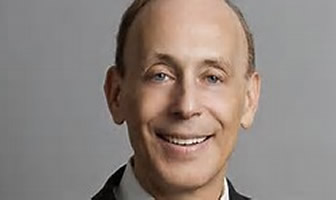
Animal Rights Law and Bruce Wagman

One of our passions at Pincus Professional Education, aside from quality CLE programs, is animal rights and rescues — and we just came across this article about Bruce Wagmen. Bruce is a partner at Schiff Hardin, and, enviably (at least for us), his practice is entirely focused on protecting the legal rights of animals. He also teaches law school courses on animals rights at UC Berkeley, Hastings College of Law and Stanford.

Bruce is likely the only lawyer at a large firm in the country to focus solely on animal rights and we’d like to thank him and Schiff Harding for that. You can read the full story from The Recorder here.

And if there is anyone reading this post who is interested in this topic – we’d consider putting on a free webinar with enough interest.


Summary Judgment Motions – Tips from the Trenches

Our speakers are always providing our attendees with helpful tips for their practice, and Karen Kimmey of Farella Braun + Martel is no exception!  When she speaks at our CLE programs, Karen provides great handouts. She provided one on Summary Judgment Motions not too long ago.

Our blog readers can take 50% off our Superior Court and Federal Court Boot Camp audio packages with the coupon code 50MSJ. 

Here are a few simple tips to improve your briefs:

MOTIONS FOR SUMMARY JUDGMENT 

Practice Tips

  • Think strategically about whether to file for summary judgment regardless of odds of winning. What are you goals?D Do you want to educate your judge? Are you trying to preview your opponent’s evidence? Always remember to consider the cost and effort involved in a Motion for Summary Judgment – it can get very expensive for your client.
  • Spend more time on your Separate Statement of Facts
    • Too often this is an afterthought for counsel – but the judges and their law clerks read these thoroughly. It is the document most relied-upon by many judges and clerks, so be careful with it, and make it easy for the court to find your references and cites.
  • Include only those facts in your Separate Statement that are truly “material”
    • The Court may assume it is material if it is in your Separate Statement
    • Each fact should be discrete and independent
  • Focus on your introduction and headings
    • Explain in a couple sentences what relief you are seeking and why you are entitled to it
    • Use argumentative headings to guide the argument
  • Do not bother with a long recitation of summary judgment standards – they know what it is. Save the space and word count for your argument.
  • Simplify if you are seeking summary judgment and complicate if you are opposing it
  • Start the process early – it takes a lot of time to prepare the papers


The Chicago Bar Foundation Fall Benefit

The Chicago Bar Foundation is holding their annual Fall Benefit and silent auction.  This is a family friendly event at the museum of Science and Industry.  The CBF’s largest annual event will provide an unforgettable night at one of Chicago’s best museums.

There will be food, an open bar and complimentary parking.  Exhibits include Christmas Around the World and Holidays of Light with more than 50 unique trees from around the globe.  Also included with be a special LEGO exhibit.  This event is taking place on November 19th so hurry and buy your tickets now!  You can find more information or purchase tickets here.

State Bar does not have to disclose bar exam information

A San Francisco Superior Court judge has ruled that the California State Bar does not have to disclose test results, including bar exam results, to the public.  Releasing these results to the public would invade the privacy of attorneys while providing no real benefit to the public.  “The general public has a strong interest in avoiding unhealthy and unwarranted comparisons among legal professionals, including attorneys who are public figures, candidates for office, or those who serve in elected or appointed positions…Additionally, the public has a strong interest in maintaining and encouraging diversity in the legal profession, and in avoiding the stigmatization of individuals or groups of individuals.” Judge Mary Wiss wrote.  Read more here.

Tequila Shots, Default Interest, and the 9th Circuit’s Reversal of In re Entz-White

Bankruptcy Attorney

The following is a guest post by frequent Pincus Pro Ed speaker on bankruptcy topics, Mette Kurth of Fox Rothschild, LLP.  You can see her blog – The Bottom Line 11 – here. 


Friday night I hosted a Día de los Muertos party.  Naturally, I invited other bankruptcy attorneys. And when you mix lawyers and tequila, things can get pretty crazy.  It wasn’t long before someone was well into an animated story about his Absolutely Worst Day Ever as a Lawyer. Now that its Monday morning and we’ve all sobered up, here’s a recap of his Very Bad Day and the surprise reversal of In re Entz-White that caused it.

Last Week, Debtors Could Avoid Accrued Post-Default Interest in the 9th Circuit by Curing an Underlying Default…

My friend (let’s call him “Roberto”) was representing a debtor that had fallen behind on its loan and was facing insurmountable default interest.  If it could avoid the default interest and other late penalties, it could otherwise cure its defaults, restore its loan to its original terms, and successfully reorganize. “No problem!” Roberto had said. And he took the case on a contingency.

Roberto was right. In re Entz-White Lumber & Supply, Inc., decided back in 1988, held that when a debtor cures a default it may avoid all consequences of the default, including higher post-default interest rates. In other words, it may both repay arrearages at the lower, pre-default interest rate and return to pre-default conditions, including pre-default interest rates, for the remainder of the loan obligation.

Mechanically, it works like this. Section 1123(a)(5)(G) of the Bankruptcy Code requires that a debtor’s plan of reorganization adequately provide for its implementation, including by “curing” any default.  The Bankruptcy Code contains a long list of definitions. Oddly, “cure,” used throughout the Bankruptcy Code, is not one of them. To fill in that gap, the Ninth Circuit adopted the Second Circuit’s definition of cure, e.g., curing a default means taking care of the triggering event, thereby nullifying all of its consequences, including default penalties such as higher interest.

Roberto had relied on Entz-White in charting a path forward for his client. The case was on the verge of confirmation, and he was on the verge of earning his contingency fee.

…. But on Friday, the 9th Circuit Issued a New Opinion Overturning Its Prior Ruling

On Friday, instead of celebrating, Roberto was shooting tequila in my living room and crying into his cerveza.

In In re New Investments, decided earlier that day, the Ninth Circuit overturned its opinion in Entz-White, holding that Bankruptcy Code Section 1123(d) voided Entz-White’s rule that a debtor who proposes to cure a default may avoid a higher, post-default interest rate in the loan agreement.  The Ninth Circuit reversed the bankruptcy court’s underlying order, which had confirmed a Chapter 11 plan based on Entz-White… and simultaneously upended my friend’s pending case as well.

Section 1123(d), which was enacted in 1994, well after Entz-White was decided, states that:

Notwithstanding subsection (a) of this section and sections 506(b), 1129(a)(7), and 1129(b) of this title, if it is proposed in a plan to cure a default the amount necessary to cure the default shall be determined in accordance with the underlying agreement and applicable nonbankruptcy law.

Following is a brief summary of the case and the court’s rationale.

1. Evaluating Applicable (Washington State) Nonbankruptcy Law

In New Investments, the debtor had defaulted on a real estate loan, thereby triggering a default-interest provision. It then filed for bankruptcy protection to avoid foreclosure.  Its plan was to sell its property and then use the sale proceeds to payoff the loan – thus curing the default – at  the pre-default interest rate. The lender objected, pointing to its contractual rights under a promissory note that called for payment of a higher interest rate (equating to approx. $670,000) upon default. The loan agreement was governed by Washington state law. The Ninth Circuit concluded that Washington allows for a higher interest rate upon default when provided for in the loan agreement. See Wash. Rev. Code Ann. Section 61.24.090(1)(a). Thus, it held that cure, as determined under the parties’ contract and applicable state law, required payment of accrued default interest.

2. The Plain Language of Section 1123(d) Drives the Ninth Circuit’s Decision

The Ninth Circuit stated that the plain language of Section 1123(d) compelled its decision. As with all plain-language arguments, there is nothing to analyze here. You can read Section 1123(d) and decide for yourself whether you agree.

3. Surprise! The Legislative History Indicates This Result May Be Unexpected

In case you disagree with the Court’s plain reading of the statute, the Ninth Circuit also looked to the statute’s legislative history and stated it would not help New Investments. Essentially, the Ninth Circuit concluded that Congress had a very particular, and different, purpose in mind when it enacted Section 1123(d) and that it may not have anticipated all of the statute’s consequences. But that, it said, is not a good enough reason to ignore the statute’s plain meaning.

What was Congress trying to do when it enacted Section 1123(d)? The legislative history indicates Congress was primarily concerned with overruling the Supreme Court’s decision in Rake v. Wade, which had stated that, in order to cure a default, a Chapter 13 debtor would have to pay interest on his arrearages even if the underlying loan agreement did not provide for it. Congress was concerned that Rake v. Wade provided an unbargained-for windfall for creditors and enacted Section 1123(d) to “limit the secured creditor to the benefit of the initial bargain.” Congress, the Ninth Circuit acknowledged, may not have anticipated how Section 1123(d) would be interpreted in other contexts.

But the Ninth Circuit felt that its holding, if unanticipated, would not be inconsistent with Congressional intent. In holding the secured creditor to the benefit of its bargain, Congress had said that a cure pursuant to a plan should “put the debtor in the same position as if the default had never occurred.” That, it said, is consistent with holding both parties to the benefit of their bargain and with the concept of cure generally (which it conceeded Section 1123(d) did not alter or attempt to define).

The Ninth Circuit tacitly recognized that its holding will make it more difficult for some debtors to reorganize, undermining the Bankruptcy Code’s goals of offering a fresh start to honest debtors. But it felt that its decision strikes an appropriate balance between the interest of debtors and creditors.

4. The Interpretation of Cure in Section 1123 is Consistent With the Concept of Unimpairment

The Ninth Circuit also stated that its ruling in New Investments would be consistent with the concept of unimpairment under the Bankruptcy Code.  To render a creditor “unimpaired” such that it cannot object to a debtor’s plan, the debtor must cure defaults and may not “otherwise alter the legal, equitable, or contractual rights” of the creditor. One of these rights is post-default interest.

Future Default Interest Differentiated

It is worth noting that the New Investments decision focuses on the treatment of accrued, default interest when a debtor is calculating required cure amounts.  But once default interest or other penalties are paid and a default is therefore cured, the debtor can still return to pre-default conditions as to the remainder of the loan obligation.

Judge Berzon’s Dissenting Opinion

In a dissenting opinion, Judge Marsha S. Berzon wrote that neither Section 1123(d) nor any other provision of the Bankruptcy Code provides a definition of “cure” contrary to the one announced in Entz-White.

As for the majority’s conclusion that Congress displaced Entz-White when it passed Section 1123(d)? Judge Berzon argues at length that this conclusion is not supported by either the plain language of the statute or its legislative history. Instead, Judge Berzon argues that the Court should not read the Bankruptcy Code to erode past bankruptcy practice absent a clear indication that Congress intended such a departure.

My friend Roberto would certainly agree.


By: Mette Kurth of Fox Rothschild, LLP

Public Interest Law Initiative Alumni Reunion Reception

The Public Interest Law Initiative Alumni Reunion Reception is taking place this Wednesday, November 9th from 5:30 p.m. – 7:30 p.m. at the Chicago French Market.

PILI’s Alumni Network Leadership Council invites Alumni, Board Members and friends of PILI to celebrate the work of nearly 4,000 PILI Alumni. There will be food, drinks, a raffle and wine tasting. All proceeds will benefit the Alumni Named Internship Campaign. You can find more information or purchase tickets here.

2016 Pro Bono Week October 24th – 28th

This week is Pro Bono week presented by the Chicago Bar Association and the Chicago Bar Foundation.

There will be several complimentary events held throughout the week, law students and non-members are welcome as well.  You can see the list of events and/or register here.  Some events also include CLE credit*.

*CLE credit is subject to approval.

Speaker Bruce Givner is a Top Rated Super Lawyer

Speaking at Sacramento Estate Planning Council

Bruce Givner of Givner and Kaye, APC is a frequent speaker and has been top rated by Super Lawyers.  Bruce has been selected every year since 2013.

Bruce’s specialties include tax law and estate planning.  Bruce recently spoke at our Asset Protection program and our Advanced Estate Planning program and shared his expertise and insight with our attendees.

Speaker Kalpana Srinivasan is featured in “Women Leaders in Tech Law” by The Recorder

Kalpana Srinivasan of Susan Godfrey is a frequent speaker at many of our programs and is the featured attorney in “Women Leaders in Tech Law.”  Kalpana has spoken at our Federal Court Boot Camp in Los Angeles for the last three years as well as our Employment Law program in 2013 and always provides useful information for our attendees.

Congratulations, Kalpana!  You can read the full interview by The Recorder here.